A simple guide for helping create space where neighbors can encounter Jesus, be welcomed at the table, and be formed together.
Start here: Serving on Sundays is one way we practice contagious hospitality. Whether you are greeting at the door, caring for kids, setting a table, leading worship, or helping with creative support, the goal is the same: create a welcoming, peaceful, and prepared space where people can be present to Jesus and one another.
Hospitality is not just a task. It is the front door of our life together. The goal is to help every person feel seen, welcomed, and at peace from the moment they arrive.
Welcoming People
Hospitality team usually includes 2-3 people.
Be positioned at the front door, either just outside or just inside.
Smile, make eye contact, and greet people before they have to ask where to go.
Help new people know where kids, coffee, bathrooms, and gathering space are located.
Use warm language: "We're glad you're here," "There's coffee inside," "I can show you where to go."
Set Up
Set out the Redeemer A-frame sign in front of the house first thing.
Prepare the entry area so it feels clear, warm, and easy to navigate.
Set up the coffee station before guests begin arriving.
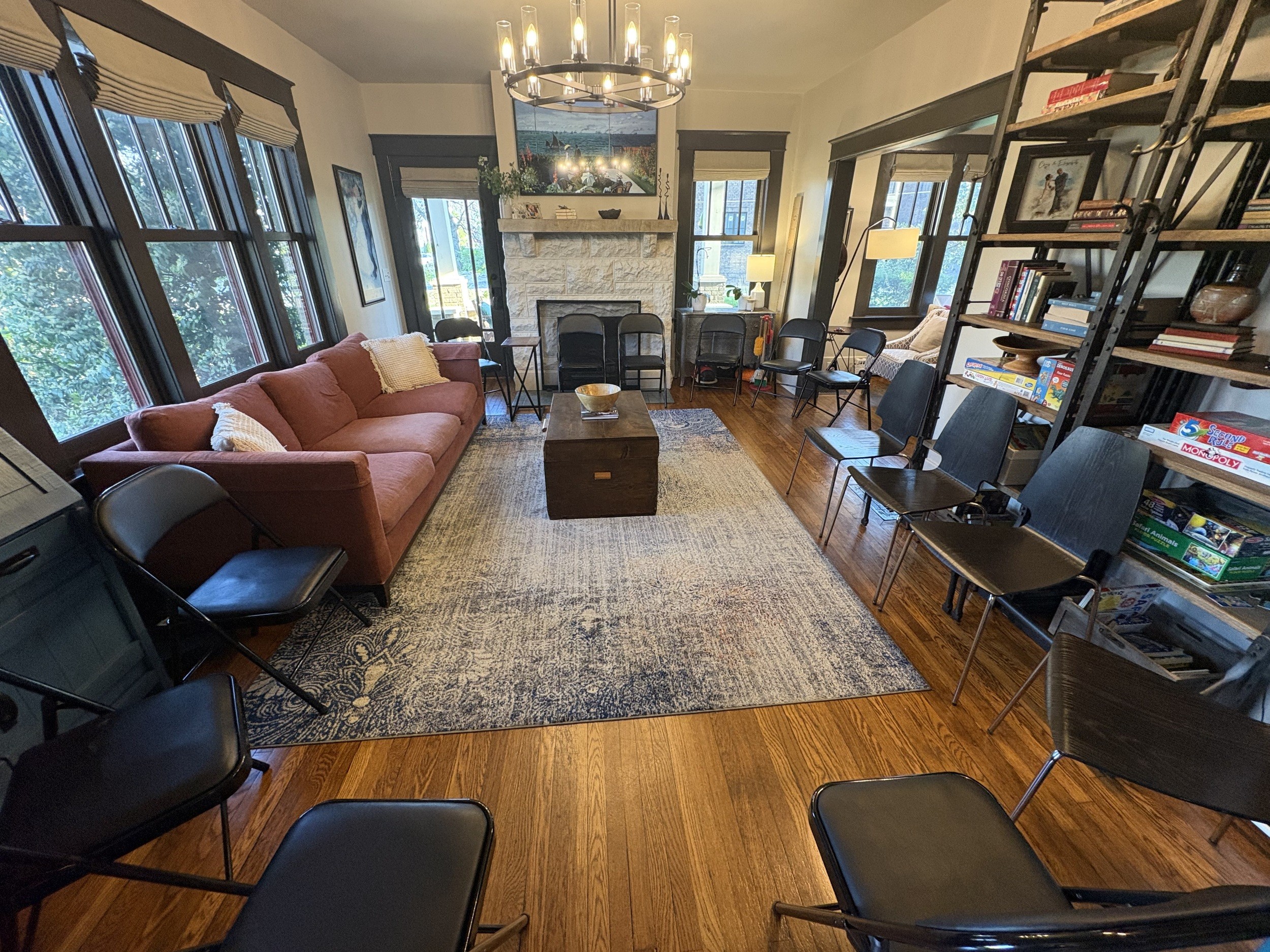
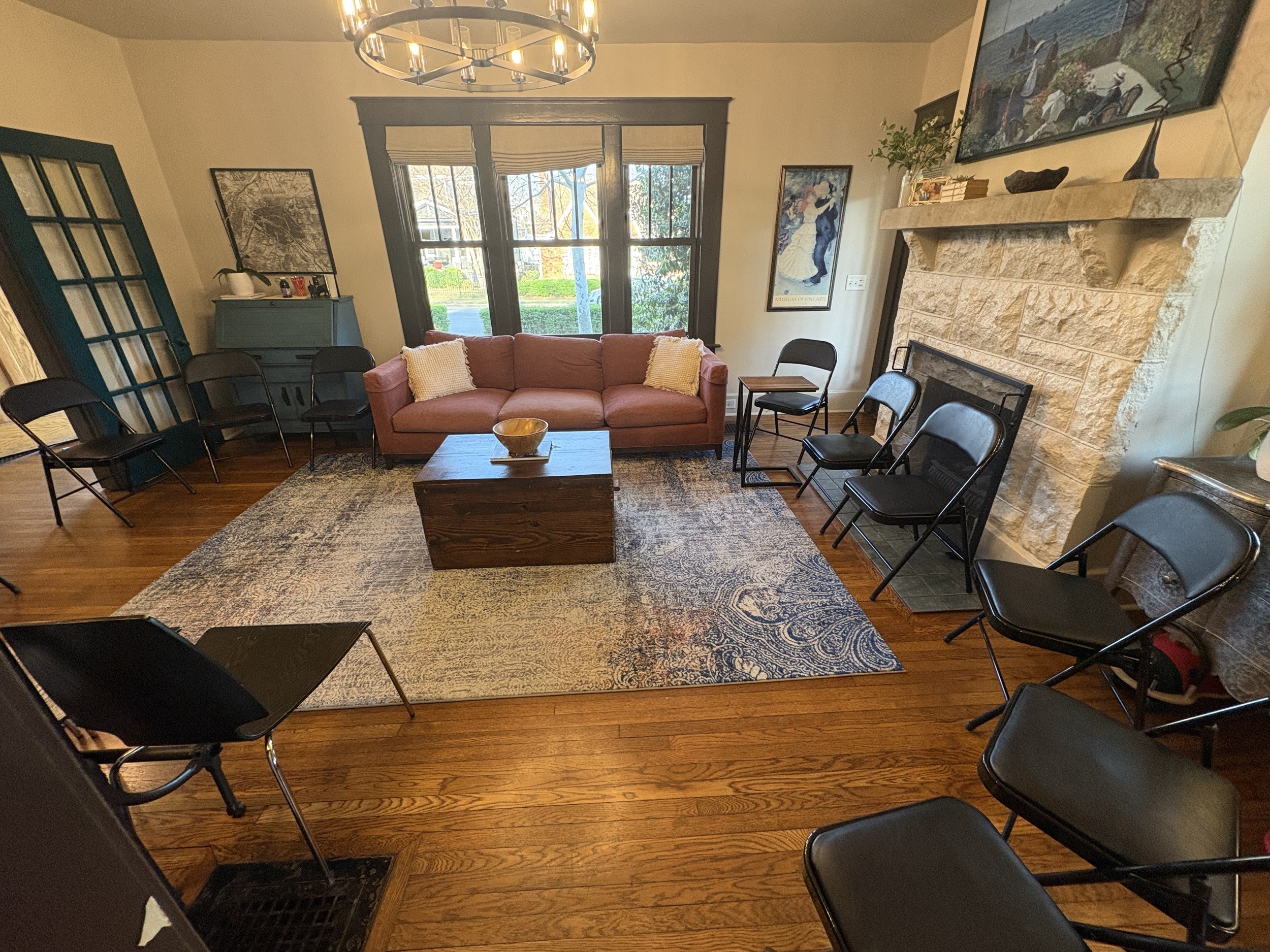
Rearrange the living room chairs so the room feels open, clean, and ready for worship.
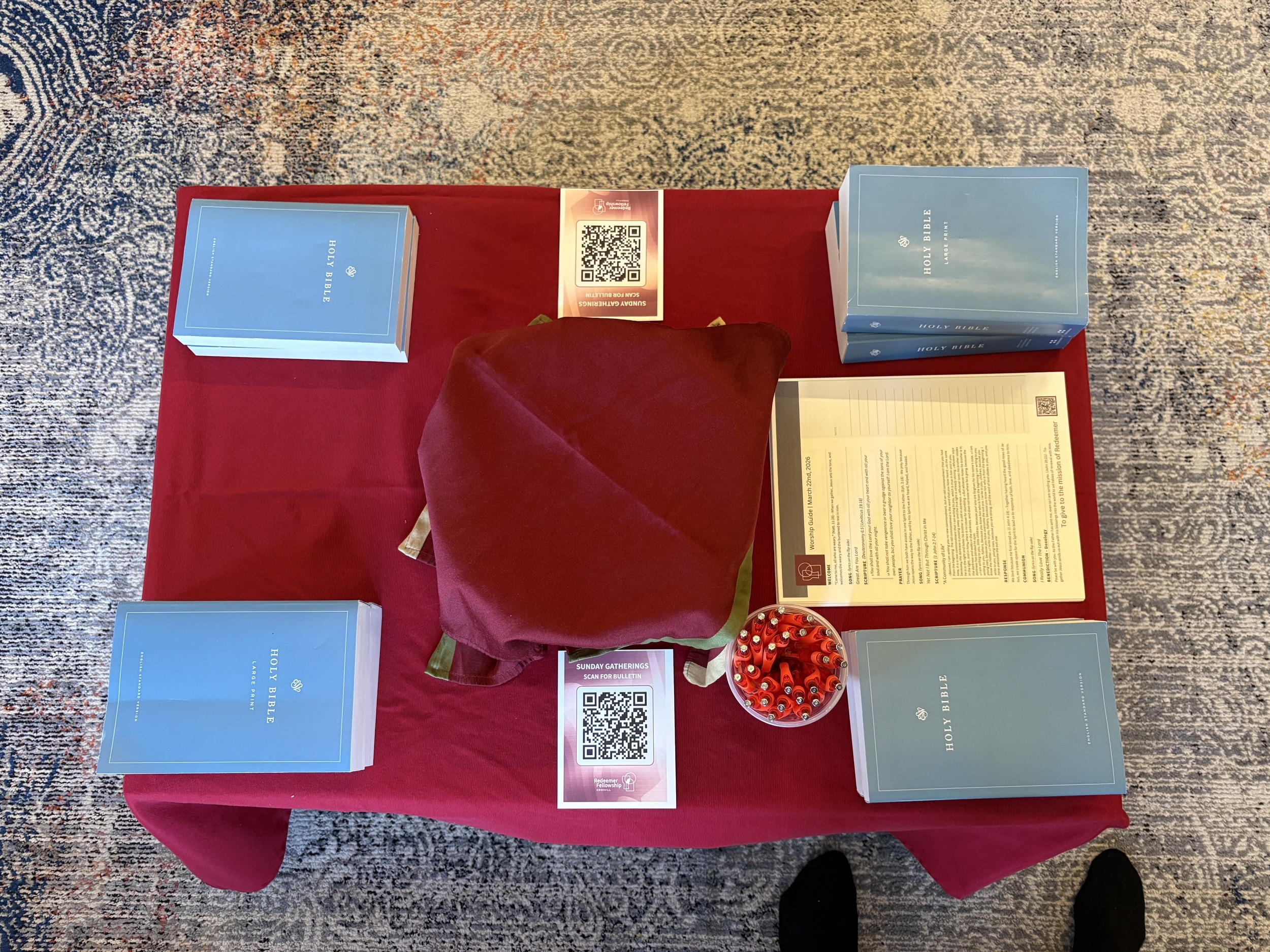
Set the communion table so it is visible, simple, and prepared.
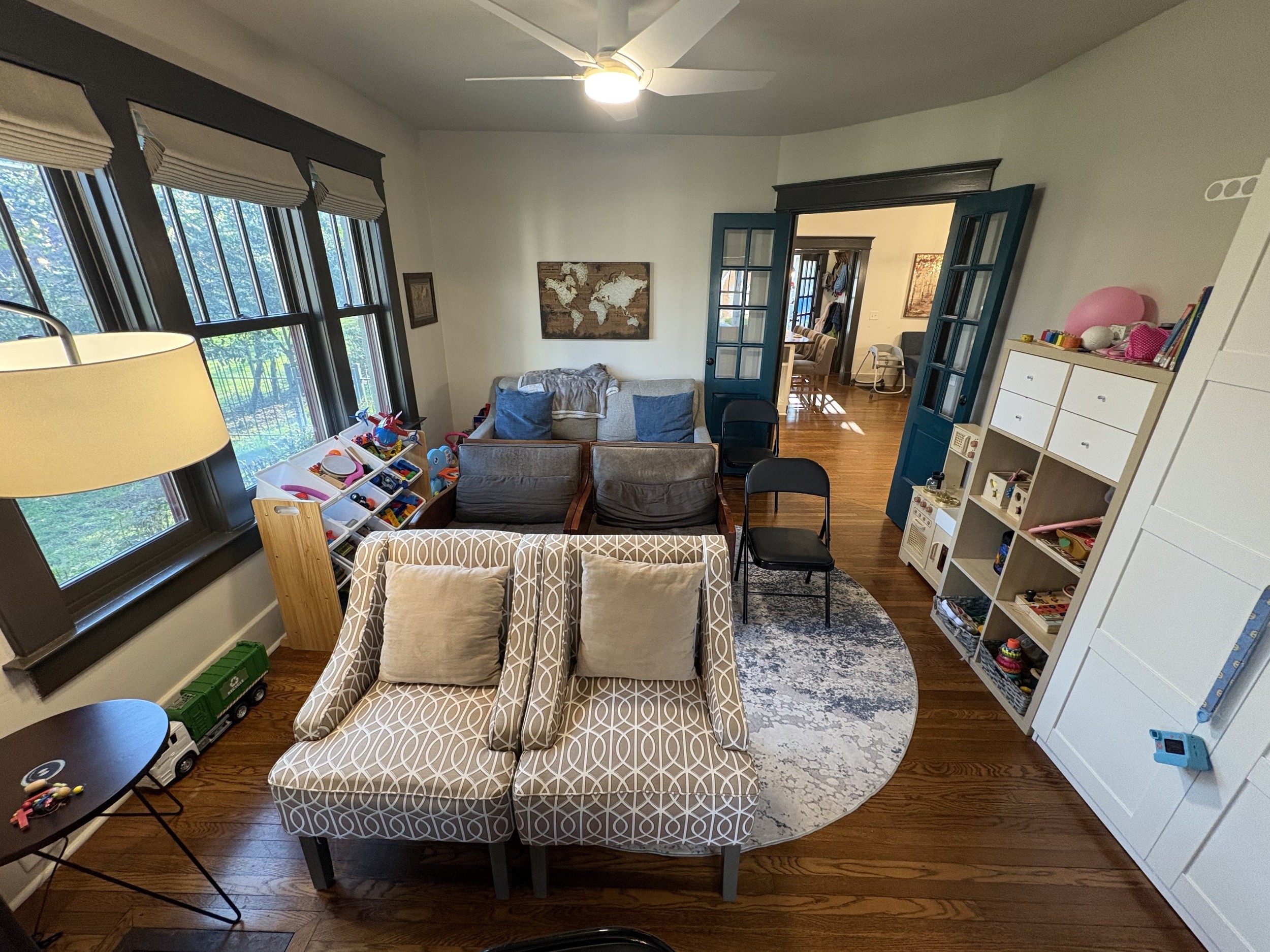
Living Room Setup
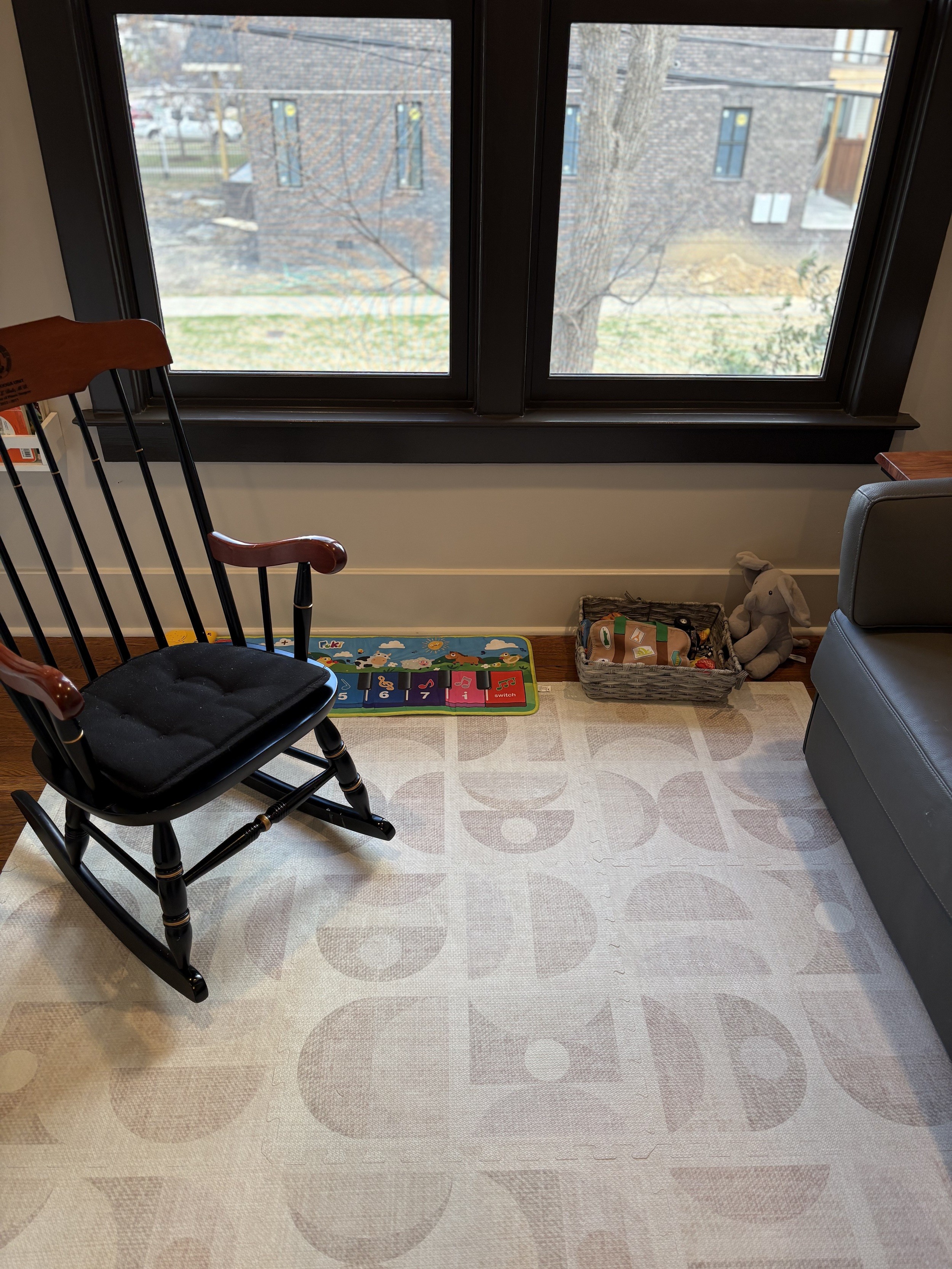
Use these photos as the target setup for the Sunday gathering space.
Living room setup · Angle 1
Living room setup · Angle 2
Living room setup · Angle 3
Communion Table
The communion table should be simple, visible, and ready before the gathering begins.
Communion table setup
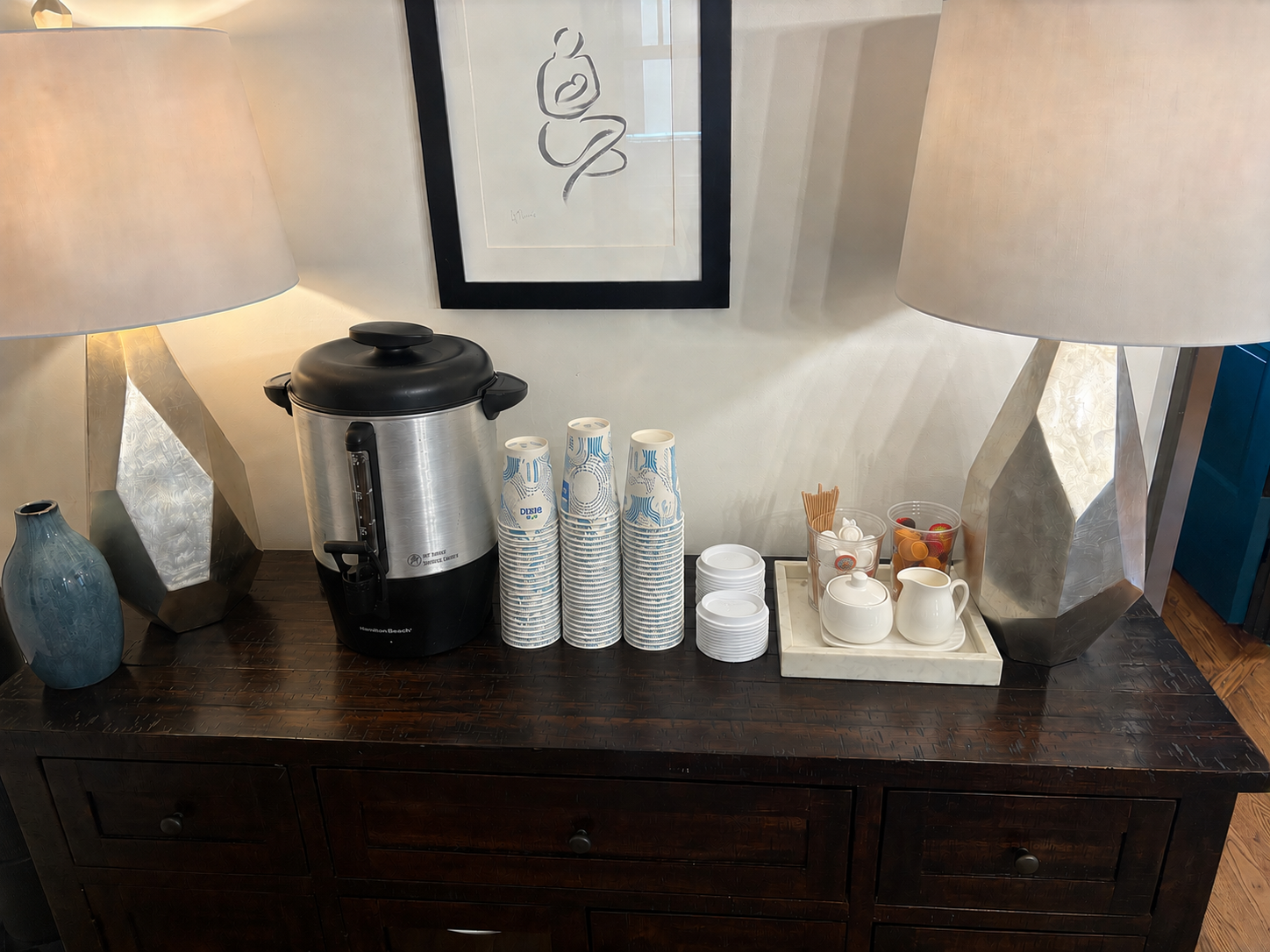
Coffee Station
The coffee station should be easy to find, clean, and ready before people arrive.
Coffee station setup
Large coffee maker instructions
Remove the lid, coffee basket, and stem assembly.
Fill the urn with cold, fresh water to the desired level. Brew at least 10 cups. Do not fill above the max line.
Wet the coffee basket before adding grounds. This helps keep small particles from passing through.
Optional: place a flattened paper filter in the coffee basket.
Make sure the stem assembly is properly seated in the heating well in the center of the urn.
Add ground coffee to the basket. Do not spill grounds into the stem assembly.
Replace the lid and plug the urn into the outlet.
The ready light will glow when brewing is finished. Allow about 1 minute per cup for brewing time.
The urn will automatically switch to keep warm. If coffee will sit for a long time, remove the coffee basket and stem after brewing to avoid bitterness.
Use a pot holder or oven mitt when removing the lid. The metal parts will be hot.
Unplug the urn after use.
Coffee amounts: 10 cups = 1/2 cup grounds. 20 cups = 1 to 1 3/4 cups grounds. 30 cups = 1 3/4 to 2 cups grounds. 40 cups = 2 to 2 1/2 cups grounds.
Important: Use coarse/percolator-style coffee if possible. Finely ground coffee may cause the basket to overflow or leave grounds in the coffee.
Tear Down
Clean and reset the coffee station.
Throw away trash and collect leftover hospitality supplies.
Bring the Redeemer A-frame sign back inside.
Reset the living room as directed by the host home.
Leave the space better than we found it.
Hospitality Win
People should feel welcomed before they understand the schedule. Warm presence, clear directions, and a ready space help make room for people to encounter Jesus.
Welcome & Vision
We are planting seeds for a lifetime of following Jesus.
Our Core Focus: To partner with parents in leading kids to know and love Jesus, while giving parents the peace of mind to fully engage in the service.
Uncompromising Safety
Physical and emotional safety is our baseline.
Relational Fun
Kids spell love T-I-M-E. We get down on their level and play.
Jesus-Centered
Every song, video, and craft points back to Jesus.
Team Expectations & Roles
Right People, Right Seats.
The Basics
Arrival: Please arrive 15 minutes before service begins to set up rooms. Arrival time is 9:45am, unless asked to arrive early. End time is noon.
Dress Code: Casual, modest, and comfortable. Be ready to sit on the floor and get a little messy with crafts.
Call-Outs: If you are sick or cannot serve, please notify the coordinator by Thursday evening.
The Roles
The Nurturer
Crawlers Room: Focuses on rocking, holding, and playing with babies and toddlers.
The Guide
Explorers Room: Facilitates the video lesson and guides the craft and discussion time.
Non-Negotiables: Safety & Security
If we fail here, the rest does not matter.
Background Checks: Every volunteer over the age of 18 must have a cleared background check on file.
Bathroom Policy: Prop the bathroom door open. Stand outside the door while the child goes. Never go inside alone with a child.
Visibility: If there is a window on the room door, it must remain uncovered at all times.
Check-In & Dismissal Process
Phase
Volunteer Action
Script / Focus
Check-In
1. Check in on iPad
2. Ask about allergies
3. Greet at eye level
4. Hand them a toy immediately
"Hi! Any allergies we need to know about today? Here is your security tag for pickup!"
"Look at these blocks! Can you help me build a tower?"
Pick-Up
1. Check out on iPad
2. Match the numbers
3. Hand out Parent Cue sheet
"Match! They loved the music today. Here's a sheet to talk about it at home."
Room Setup & Ratios
Slater's: 1000 15th Avenue South
Weber's: 1022 15th Avenue South
Crawlers & Cruisers
Ages: 6 months - 2 years
Ratio: 1 worker to 4 kids
Focus: Safe & Nurturing
The Explorers
Ages: 3 years - 8 years
Ratio: 1 worker to 8 kids
Focus: Energetic & Interactive
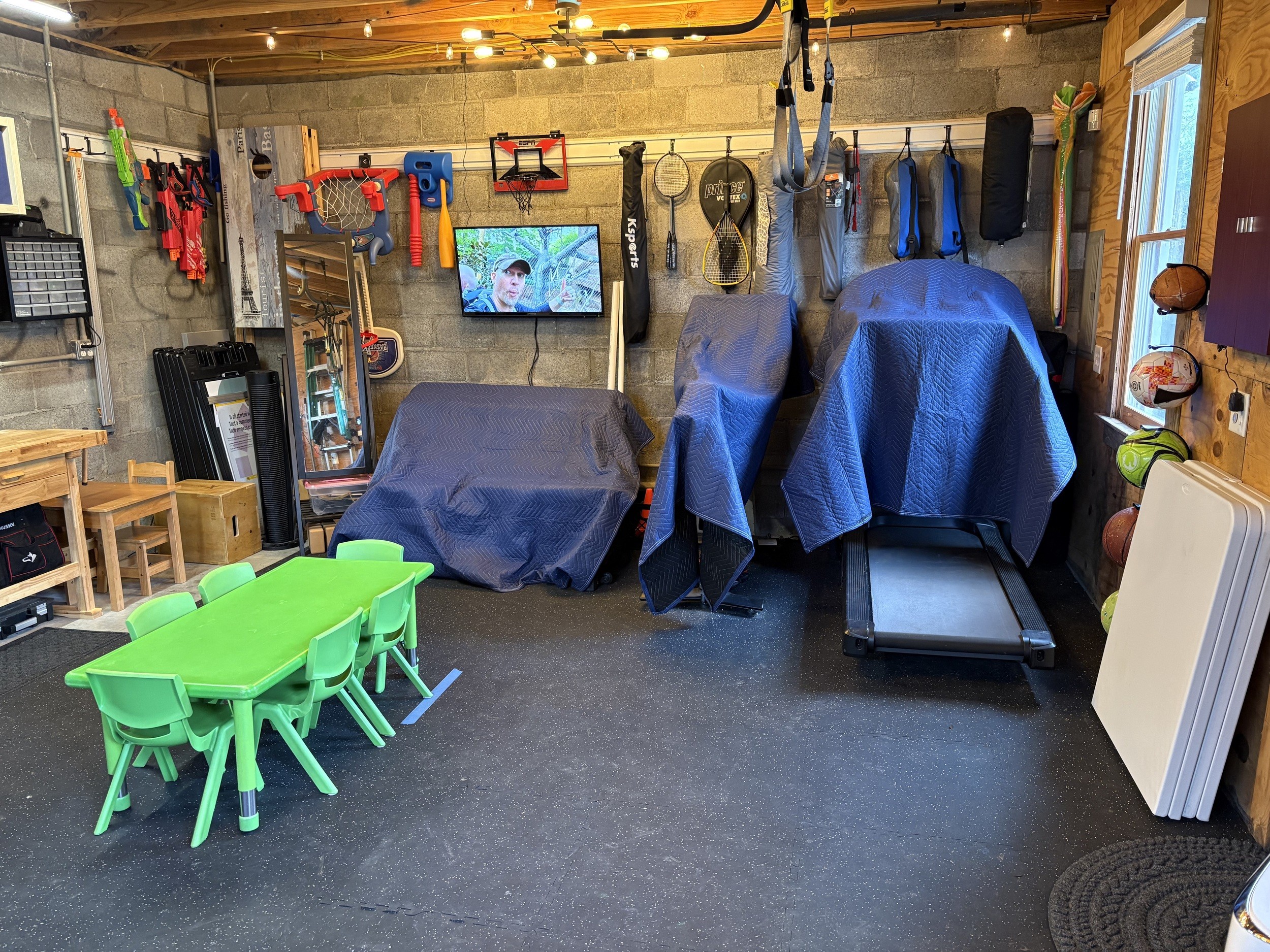
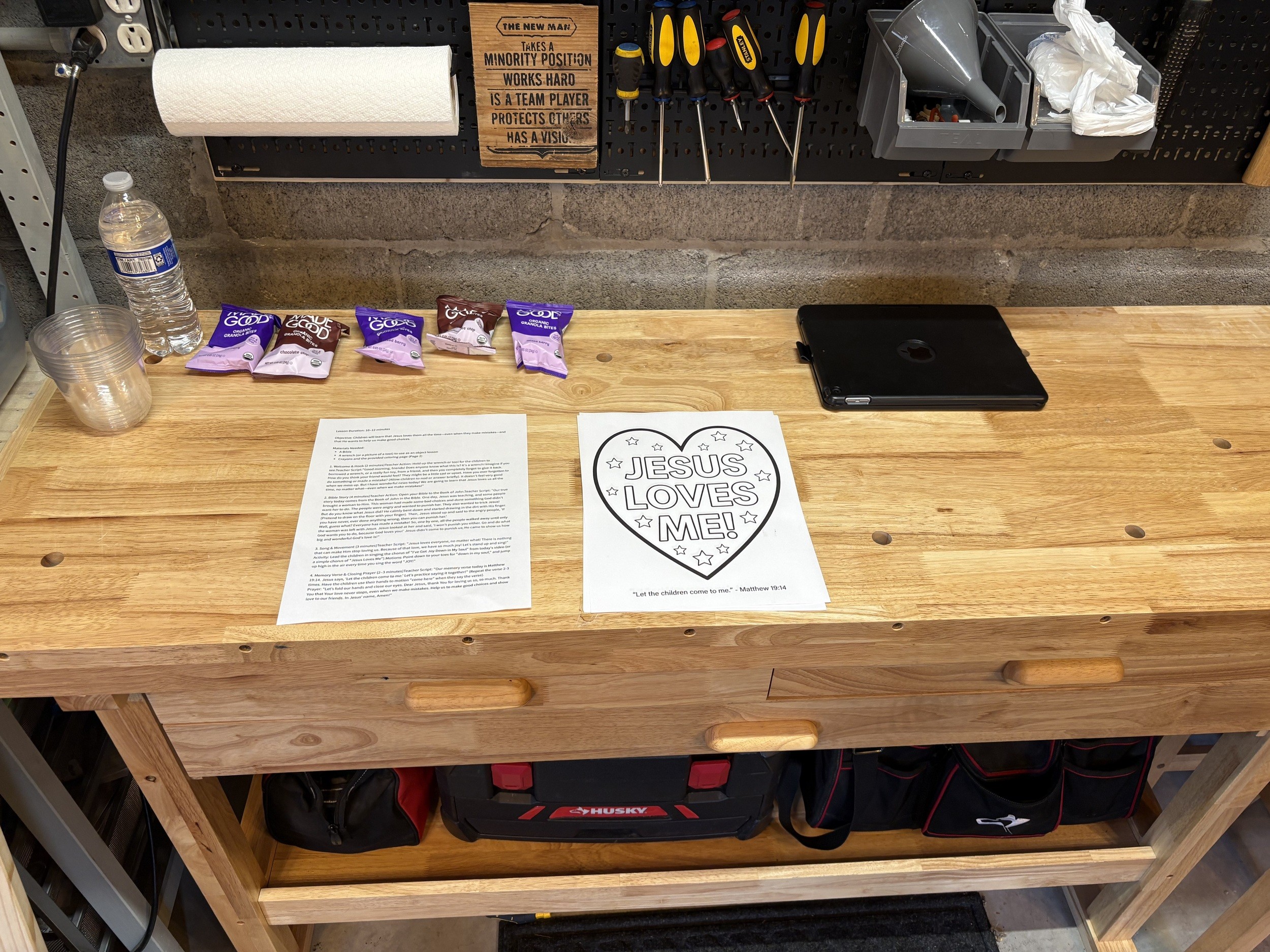
Explorers Setup
Slater's Home: Garage area. Use moving blankets to cover equipment.
Set up table for video, lesson, and coloring.
Snacks and water will be in the kitchen to bring out.
iPad will be on, ready, and cued up for the video.
You can turn on the TV on the wall and show it via AirPlay to "GYM."
Weber's Home: 2nd floor open area. Pull toys from the bedroom closet.
Explorers garage setup · Angle 1
Explorers garage setup · Angle 2
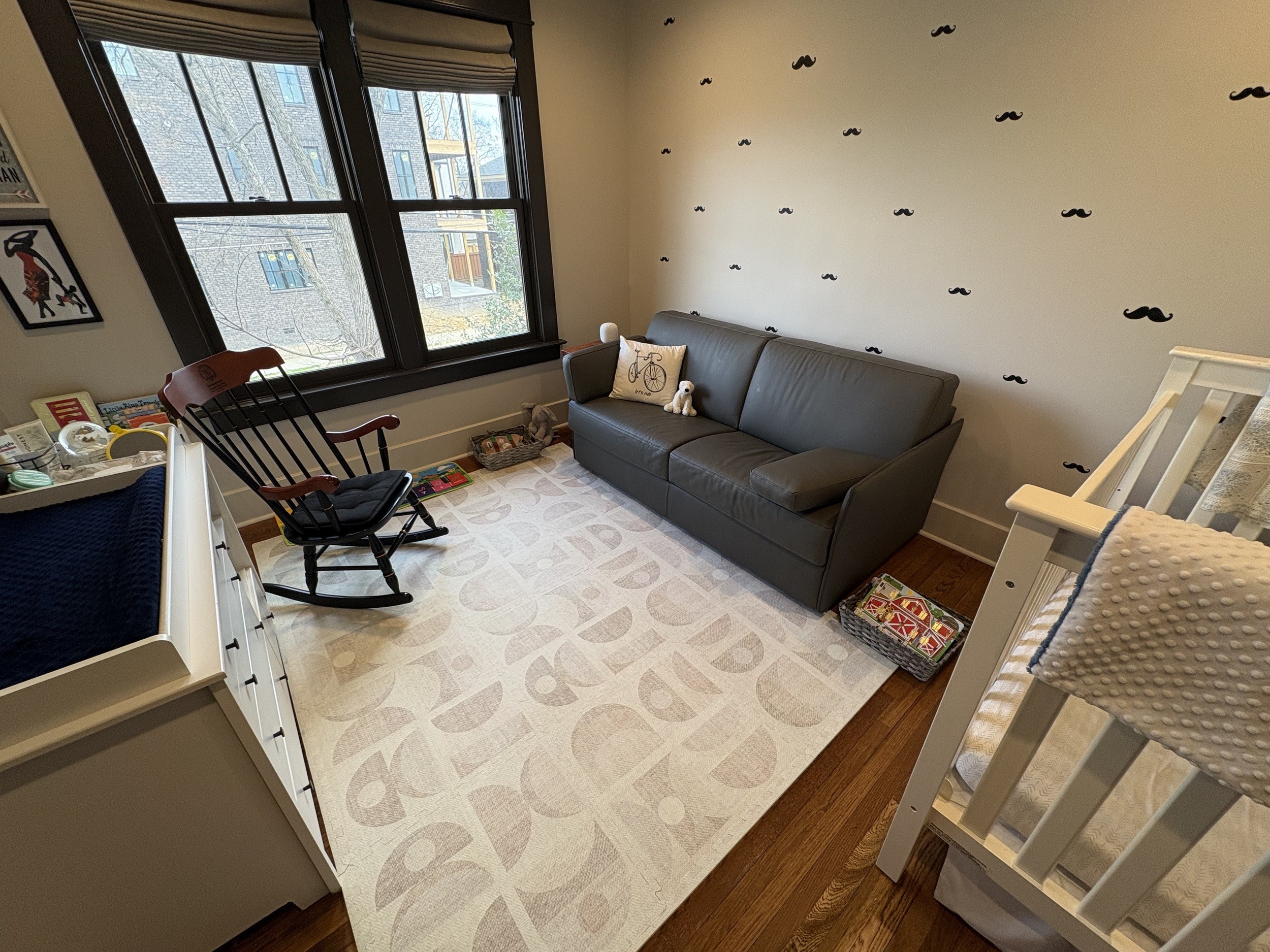
Crawlers & Cruisers Setup
Slater's Home: 2nd floor bedroom. Grab soft toys from the 1st floor.
Weber's Home: 1st floor bedroom. Grab soft toys from the 2nd floor.
Keep the space soft, simple, safe, and easy to supervise.
Crawlers & Cruisers setup · Angle 1
Crawlers & Cruisers setup · Angle 2
Lesson Plan Creation
Upload the video from @christskids6589 that matches the Sunday Gathering day to Google Gemini.
Ask: "Turn this video into a 10-12 minute Sunday School Lesson Plan for kids 3-7 years old and format it on a letter size page with an additional letter size page following that has a coloring page that corresponds to the lesson plan."
Copy the lesson plan and paste it into the weekly lesson document.
Print 1 lesson and 7-8 coloring pages for Redeemer Kids Support Staff.
Sunday Morning Playbook
The Rhythm for "The Explorers" Room.
Time
Focus
Instructions
First 15 mins
Free Play
Toys are in the grey fabric drawers. Let kids get their energy out while everyone arrives.
Next 15 mins
Video Time
Play the lesson video from @christskids6589 on YouTube.
Next 20 mins
Small Group
Execute the lesson plan and have children engage with the coloring page.
Next 10 mins
Snack Time
Snacks and waters are to be eaten at the table.
Final 10 mins
Clean Up & Pick Up
Kids help tidy up the space while waiting for parents with matching tags.
Note: Crawlers & Cruisers does not follow a strict timeline. The focus is open play, snacks, and a 2-minute interactive storybook reading.
Emergency Procedures & Health Guidelines
Health & Sickness
The 24-Hour Rule: Kids must be free of fever, vomiting, diarrhea, or unexplained rashes for 24 hours, unmedicated, before entering RF Kids.
Allergies: We are a peanut-free environment. No snacks are given without checking the child's name in the check-in software for allergies. When in doubt, leave it out.
Diapers: Volunteers do not change diapers. Text the parent to come to the room if a change is needed.
Emergencies
Crying / Separation Anxiety: Try to engage the child with a toy or activity for 10 minutes. If they remain inconsolable, text the parent.
Minor Injury: Apply a band-aid or ice pack from the First Aid Kit. Inform the parent at pick-up.
Evacuation: Grab the check-in roster. Calmly lead the children out the nearest safe exit to the designated meeting spot. Immediately count the kids to match the roster.
What Is a Table?
A Table is any moment when you slow down with someone, show real love, and help them take a step toward Jesus.
Purpose
You are doing this on purpose, not by accident.
Hospitality
Food or drinks when possible; warmth and kindness always.
Presence
You are actually paying attention, not rushing.
Next Steps
Every time, someone moves closer to Jesus.
Overall Focus
Big Goal: Everyone repeatedly encountering life with Jesus for the renewal of our neighborhoods.
Every Table starts by noticing where someone is with Jesus and helping them take the next step.
Curious
Interested and spiritually open.
Connected
Involved in community life.
Committed
Following Jesus.
Called
Helping others follow Jesus.
3 Paths of Discipleship
Path 1 · Curious → Connected
Open Door → Invitation to Jesus
Goal: Nobody feels left out from meeting Jesus.
Together: Everyone is invited by someone they know.
Next Steps
Be welcomed
Invite a neighbor
Ask real questions
Types of Tables
Common Table: Neighborhood hangouts, meals, or simple meetups.
Dinner Table: Having neighbors in your home for a meal.
Family Table: Helping someone experience Redeemer's community.
Path 2 · Connected → Committed
Open Space → Growth in Community
Goal: Learn how to walk with Jesus in every part of life.
Together: We grow best with others - prayer, groups, worship, mentors.
Next Steps
Join a group
Find a mentor
Build healthy rhythms
Talk through life's struggles
Types of Tables
Family Table: Deeper commitment to Redeemer's community life.
Discovery Table: Exploring Jesus together, asking honest questions.
Formation Table: Mentoring and learning Jesus-shaped rhythms.
Path 3 · Committed → Called
Open Table → Living on Mission
Goal: Practice the presence of Jesus in everyday life and the neighborhood.
Together: Mission is shared - no one serves or leads alone.
Next Steps
Co-host a table
Serve with others
Help multiply disciples
Types of Tables
Family Table: Bringing and leading others into Redeemer's life.
Formation Table: Forming and reproducing the Redeemer vision.
Coffee Table: Coaching, equipping, and sending.
4 Core Ingredients
Every Table includes these four ingredients.
Purpose
Pray and plan ahead.
Hospitality
Food when possible, warmth always.
Slow Presence
Unhurried time and deep listening.
Next Step
Help someone move one step closer to Jesus.
5-Step Table Process
1
Pray & Prepare
Who: Anyone God puts on your heart.
What: Identify who to meet with - neighbor, friend, coworker, church family.
Where: Choose the right spot - home, coffee shop, neighborhood, church.
When: Set aside a real time.
How: Pray for them, prepare your heart, and set the environment with food, drinks, space, and a possible next step.
2
Invite & Welcome
Who: You, as the inviter.
What: Give a personal, friendly invitation - never generic or mass-sent.
Where: Somewhere they feel comfortable.
When: Early enough so they can plan.
How: Make them feel expected, wanted, and seen.
3
Share & Listen
Who: You and the person or people you are with.
What: Share your life and faith naturally; listen with curiosity.
Where: Across the table.
When: During the meal or meet-up, unhurried.
How: Ask real questions, reflect back, and share Jesus in a way that fits where they are - Curious to Called.
4
Love & Linger
Who: You, showing Jesus' kindness.
What: Be patient, slow, and present.
Where: At the table - do not rush.
When: Leave space beyond the main part of the conversation.
How: Enjoy the person more than the agenda.
5
Next Step & Follow Up
Who: You, led by the Spirit.
What: Name one clear next step - another Table, joining a group, worship, serving together.
Where: In their everyday life.
When: Before they leave, or soon after.
How: Communicate clearly, follow through personally, and pray for them.
Notes for Table Leaders
Consistency: Every leader agrees this is the Redeemer way of doing Tables.
Flexibility: Coffee Tables can fit any stage; other Tables fit best in their specific path.
Alignment: Every Table moves someone one stage closer to Jesus - Curious to Called.
Worship leadership is not performance. It is hospitality through song and prayer. We lead in a way that helps people participate, listen, and turn their attention to Jesus.
Before the Gathering
Arrive early enough to set up, tune, check sound, and pray before people arrive.
Coordinate with the Creative Team on microphones, instruments, tracks, and lyrics if needed.
Keep transitions simple, warm, and clear.
During Worship
Lead with confidence and humility.
Invite participation without pressure.
Keep the focus on Jesus and the shared life of the room.
After Worship
Help tear down and store worship equipment.
Check with the Creative Team before unplugging or moving anything.
Leave the space clean and ready for the next use.
The Creative Team serves the room by helping people hear clearly, see what they need, and remember the story of what God is doing. The win is not perfection. The win is clarity, calm, beauty, and readiness.
Start here: Creative support is a form of hospitality. We capture the message, preserve the story, and reset the tools so the next gathering can be served without confusion.
Sunday is complete when the message is captured, the visual story is protected, the room is reset, and the team knows the next step.
Message captured and verified.
Photos uploaded or backed up.
Equipment put away.
Batteries charging before anyone leaves.
Purpose
Capture the message and preserve the story of the gathering with care, peace, and excellence.
Preparation
Arrive early, check assignments, power on gear, confirm storage, test audio, and clarify handoffs.
Process
Frame the room, monitor audio, record the message, capture story moments, and communicate calmly.
Done
Verify the message, upload or back up files, put equipment away, charge batteries, and confirm the final handoff.
Every Sunday should feel peaceful, repeatable, and ready for the next person who serves.
The Sony setup is the primary message capture workflow. The goal is a stable frame, clean audio, and a complete recording from the first word to the final prayer.
Purpose
Capture the sermon or teaching with enough quality for review, sharing, and archiving.
Start recording early, monitor the frame and audio, avoid unnecessary movement, and let the recording run through the final transition.
Done
Stop recording, confirm file exists, power down, return gear, and hand off the card or file for upload.
Simple rule: If the message is happening, the primary camera should already be recording.
The Fuji camera is the backup angle. It protects the message if the primary camera fails and can provide a simple alternate frame when needed.
Purpose
Provide a reliable backup recording and a secondary visual option from a distance of roughly 10-12 feet.
Preparation
Use the 18mm f/2 lens by default, charge the battery, format the card, mount on tripod, and test a short clip.
Process
Place the camera 10-12 feet away, frame the speaker with room context, lock exposure/focus when possible, and begin recording early.
Done
Confirm the clip saved, back up the file, power down, cap the lens, return the camera, and charge the battery.
Fuji distance setup manual
Default lens choice: Use the Super EBC f=18 1:2 Fujinon Aspherical lens for the 10-12 foot setup. It is wider and more forgiving in a home gathering room. Use the XF25mmF2 R WR only if you want a tighter speaker-only frame and have enough room.
Recommended starting setup
Distance: Place the tripod about 10-12 feet from the speaker or teaching position.
Lens: 18mm f/2 by default. Set aperture around f/2.8-f/4 if there is enough light for a little more focus forgiveness.
Frame: Capture the speaker from about waist-up or mid-body, with a little room context. Leave headroom and avoid cutting off hands if they gesture.
Height: Set the tripod near chest-to-eye level and keep the camera level.
Focus: Focus on the speaker's face. If autofocus hunts, switch to manual focus after focus is set.
Exposure: Avoid a blown-out face. Slightly darker background is better than an overexposed speaker.
White balance: Set a fixed white balance if possible. Do not leave color shifting throughout the recording.
Stability: Turn off unnecessary handling once recording begins. No zooming or reframing unless absolutely needed.
Video checklist
Battery charged and spare nearby.
SD card formatted with enough space.
Short test clip recorded and played back before gathering starts.
Camera begins recording 1-2 minutes before the message begins.
Camera continues recording through the final prayer or handoff.
Backup mindset
The Fuji is not meant to be fancy. It is meant to be steady, clear, and dependable. A simple wide frame that captures the whole message is better than a beautiful shot that misses the teaching.
Photography helps Redeemer remember and share the story of life together. The goal is authentic, warm, human, and inviting images.
Purpose
Capture the life of the church in a way that honors people and reflects warmth, presence, hospitality, and joy.
Preparation
Check the camera, clear storage, charge the battery, and know the moments that matter before the gathering begins.
Process
Look for real connection, tables, prayer, kids, welcome moments, serving, worship, and natural expressions. Avoid distraction.
Done
Upload selects, remove unhelpful images, protect dignity, and confirm the folder is ready for communication needs.
Photo principle: Capture people with dignity. No one should feel used as content.
The workflow is not finished until the files are where the next person can find them. Uploading is part of serving the team.
Purpose
Make photos, videos, and creative files easy to find, use, and archive.
Preparation
Confirm the upload destination, file type, date, and whether the file belongs in graphics, photography, or video.
Process
Create or use the correct dated folder, upload files, wait for sync to finish, and name anything that needs clarity.
Done
Confirm the upload opens, tell the right person it is ready, then clear cards only after files are safely backed up.
Google Drive destination
Use this folder: Redeemer Master Files (shared) → 4 Branding & Communication.
Place graphics in 1 Graphics, Sunday photos in 2 Photography, and message or gathering video in 3 Video. When possible, create a dated folder using YYYY-MM-DD.
Finish strong: upload, verify, communicate, charge, and reset.
Thank you for serving
Every small act of preparation helps make room for someone to encounter Jesus. We serve so that neighbors can be welcomed, children can be cared for, the Word can be heard, and the table can be extended.